In 2008, the presidential election was historic because our country finally had a chance to elect its first black or female president. In 2012, the presidential election is historic because no Republican has ever won his party's nomination without winning the South Carolina primary, and that might happen this year.
I think 2008 was more fun.
Monday, January 30, 2012

Why I Hate Times Square
 |
| I did not see this movie. |
This was both the second year I spent New Year’s Eve in New York City and the second year I made sure to stay as far away from Times Square as possible. Only this time, it wasn’t enough to just stay away from Times Square. I also felt the need to have multiple conversations with my friends about why I wanted to stay away from Times Square and how I couldn’t imagine why anyone in their right mind would ever voluntarily go spend eight hours in such a crowded, cold, bathroom-less place.
In short, I don’t like Times Square very much, and the occurrence of yet another New Year’s Eve gave me an opportunity to think about why.
It’s not the tourists. Yes, they make it exceedingly difficult to walk, and yes, I become incensed every time I see someone stop in the middle of a crowded sidewalk to take a picture of the M&M store, but Times Square is a tourist attraction. If I got angry with tourists for visiting Times Square, I would have to retroactively get angry with myself for visiting the Eiffel Tower in Paris, the Space Needle in Seattle, the Lincoln Memorial in DC, etc., etc. I hate mankind and myself for plenty of things already. I don’t think I can handle adding “visiting tourist attractions when you’re a tourist” to the list.
No, the reason I hate Times Square is the same reason I hate Paris Hilton (sorry if that reference is too dated): it’s famous, but it doesn’t deserve to be. In other words, I don’t begrudge tourists for visiting it; I just don’t understand why they visit it in the first place. I’ve been there plenty of times (rarely by choice, just so you know that this piece isn’t a giant exercise in hypocrisy), and the most complimentary thing I can think of to say about it is that it looks kind of cool at night when everything is lit up.

Apart from that, it’s always appeared to me as nothing more than a collection of larger and more neon versions of stores that exist pretty much everywhere else in the country. The logic of going to New York City and eating at an Olive Garden even though the food is going to taste exactly the same as it did in Davenport except hey look at how cool the sign is at this one completely escapes me and brings back memories of Michael Scott’s first trip here. If you’re in the mood for Italian food, why not go to, say, Little Italy? Or pretty much anywhere. As Jon Stewart once pointed out, New York is a pretty good place to get Italian food.

The same could be said about the McDonald’s, the T.G.I. Friday’s, and, yes, even the M&M store. I’ll admit that it offers more variety than your typical candy shop, but ultimately, a bag of personalized mauve M&Ms is going to taste about the same as a bag you buy from CVS.
CVS, by the way, currently operates over 7,000 stores across the United States.
I can’t imagine this will actually change anyone’s mind about Times Square, given that it’s been famous for over 100 years and I haven’t gotten recognized on the street since I switched to contacts in 2005 and stopped getting mistaken for Harry Potter. But on the off chance that anyone reads this who’s thinking about visiting New York City, please trust me: there are several better tourist attractions to go to than Times Square.
Unless Olive Garden is doing its Never Ending Pasta Bowl promotion. That deal is too good to pass up. The trick is to order a bowl after you aren't hungry anymore, have one bite, and then take it home. Boom: second dinner.
Monday, January 23, 2012
On The Bro'd
(This is a profile I wrote of funny person Mike Lacher for my Cultural Affairs class at Columbia back in December. You can check out the tumblr account/book that it focuses on here and read the profile directly below these parenthetical remarks.)
 In 1957, The New York Times boldly proclaimed that the publication of Jack Kerouac’s On The Road was “a historic occasion.” The nation’s paper of record praised his tale of Sal Paradise and Dean Moriarty—the alter egos for Kerouac and Neal Cassady, respectfully—traveling back and forth across the American landscape as “the most beautifully executed, the clearest and the most important utterance yet made by the generation Kerouac himself named years ago as ‘beat,’ and whose principal avatar he is.” The prophet of the twentysomethings had spoken, and it turned out that what he had to say was intelligent, poetic, and inspiring.
* * *
* * *
* * *
 In 1957, The New York Times boldly proclaimed that the publication of Jack Kerouac’s On The Road was “a historic occasion.” The nation’s paper of record praised his tale of Sal Paradise and Dean Moriarty—the alter egos for Kerouac and Neal Cassady, respectfully—traveling back and forth across the American landscape as “the most beautifully executed, the clearest and the most important utterance yet made by the generation Kerouac himself named years ago as ‘beat,’ and whose principal avatar he is.” The prophet of the twentysomethings had spoken, and it turned out that what he had to say was intelligent, poetic, and inspiring.
 Blogger turned author Mike Lacher sees it a bit differently.
“A lot of the stuff they do in that book is just bro stuff,” he said, referring to the characters’ frequent bouts of drinking, partying, and hooking up. “It just happened to be that they wrote really well and were crazy. So then they were able to be beats instead of bros.”
Although a precise definition of bros is difficult to pin down (Urban Dictionary currently has 220 options), most people can agree on the following: they emerged on America’s cultural scene sometime in the past decade; they are extremely and vocally fond of indulging in alcohol, revelry and sex; they tend to be males in their late teens or twenties; and they enjoy the music of Dave Matthews, the writings of Tucker Max, and the humor of Dane Cook.
Late in 2010, Lacher decided to combine the latent bro tendencies in Kerouac’s seminal work with the blatant bro ethos of today. The end result was On The Bro’d, a parody of On The Road written in bro-speak that started as a tumblr account and will be published as a book this coming spring. Dean is now a Beta Phi Omega brother from Arizona State, and although the only ones for Sal in the 1950s were those who “burn, burn, burn like fabulous yellow roman candles exploding like spiders across the stars,” he is now more intrigued by those who “chug, chug, chug like fucking awesome players exploding like spiders across an Ed Hardy shirt.”
“That’s the part that makes it most appealing,” said Lacher. “Hearing that contrast between what’s sort of accepted as higher literary culture interacting with the lowest form of slang.”
Lacher himself does not give off the appearance of a bro. He is tall, fair-skinned, thin, and unassuming, making him a much better fit for an NBC sitcom than an MTV reality show. Nevertheless, he has been informally learning about the social group since his college years at the University of Michigan.
“I went to a Big Ten school,” he said. “As soon as you’re at that first fraternity party, it’s like, ‘Oh, this is really just a type of human being.’”
Lacher moved to Chicago after graduating in 2007, where he planned to work at his friend’s restaurant while performing improv in his spare time. The restaurant wouldn’t hire him, though, and he was forced to fall back on a skill he had learned earlier as a favor for his mom: flash development.
“The previous year, my mom needed me to build her a flash website, so I learned flash for that purpose,” he said. “Pretty much every job that I’ve had has depended upon that skill.”
Shortly after his failed attempt at gaining employment in the food service industry, Lacher got hired at NogginLabs, a company that builds custom e-learning software. He still made time to perform improv on the side and continued doing so until moving to New York with his girlfriend “for fun” in October 2010. Around the end of 2009, however, he started growing less interested in the comedic potential of improv and more interested in the comedic potential of the Internet.
“It feels like unconquered territory,” he said. “Everyone has already done plenty of good improv shows…but people are still figuring out what you can do that’s funny on the Internet.”
Lacher took it upon himself to try figuring this out and has so far come up with a variety of answers. An application that could transform any website into a Geocities page straight out of the mid-90s was funny enough to receive over 600,000 visits in its first week and merit a mention in The New York Times Magazine. A tumblr account featuring images of Michael Bublé getting stalked by a velociraptor made it into GQ. And the equally self-explanatory Muppets with People Eyes got written up by Time.
The one thing most of these projects had in common, according to Lacher, was that their time in the spotlight didn’t last long.
“People have a short attention span on the Internet,” he said, “and also, those single serving websites…I think they’re just not that funny after a while.”
These were Lacher’s initial expectations for On The Bro’d. Born out of his simple observation that “road” and “bro’d” rhyme, he thought it would entertain both him and the Internet for a brief period of time before they each moved onto something else.
Thus, approximately one year ago, Lacher launched On The Bro’d as another one of what he calls his “one-joke tumblr things.” By the initial post—a parody of, appropriately enough, On The Road’s first paragraph—he had already firmly established the tone: Sal’s “serious illness” was replaced with “a wicked fucking hangover,” while Dean was shrouded in Axe Body Spray instead of mystery.
This strong, humorous voice was enough to convince Hannah Gordon, a literary agent with Foundry, that Lacher’s most recent project had more potential than a series of photoshopped Muppets. She first heard about the fledgling tumblr account from one of her colleagues, and unlike Lacher himself, she did not see it as just a one-joke tumblr thing. She saw it as a book.
“You kind of have to go with your gut on these things,” Gordon said. “If you’re really enjoying it, and you want to keep reading it, you can’t think, ‘Oh, I’m the only person out there who would like this.’ You have to imagine there are pockets of people who think like you do.”
The Internet has recently become a great resource for literary agents trying to find new clients, said Gordon, especially in the wake of fruitful blog-to-book deals such as Stuff White People Like and Awkward Family Photos. However, both Gordon and Brendan O’Neill, Lacher’s editor, acknowledged that these past success stories do not automatically mean a blog that turns into a book will be a hit.
O’Neill, who works at Adams Media and has previously edited book versions of popular blogs, said the biggest factor regarding the ability of these projects to sell effectively boils down to whether or not the author has the ability “to write and write funny.
“I think Mike’s able to do that,” he added.
Although Lacher had not considered turning On The Bro’d into a book before Gordon contacted him, he was very receptive to the idea. The two put a proposal together, and Adams Media—a publishing company that has previously printed literary parodies such as The Stoned Family Robinson and Bad Austen: The Worst Stories Jane Never Wrote—decided to buy it during the winter of 2011. Now, all Lacher had to do was write the thing, a process he said went “pretty well.
“It had its ups and downs,” he continued. “Getting to try to use that Kerouac-y poetic cadence but with bro stuff is fun. But there’s other parts where it can reach a certain tedious level where every day it’s like, ‘How do I rephrase this?’”
Lacher frequently referred to numbers when describing how he wrote On The Bro’d. There were 240 pages in total; he tried to write at least two pages per day; and it took him approximately 40 minutes per page. This mechanistic update of Kerouac’s three-week typing binge enabled him to finish his first draft in August, which he is currently waiting to get back from Adams Media.
“I’d usually try to wake up at six and get some done, and then try to get whatever else done at night,” Lacher said. “That was the part where it just got exhausting because it’s like you wake up and work, then go and actually work, like in an office, and then come home and work more. I know there definitely were times where people from work would be like, ‘Hey, we’re going out!’ and then I’d be like, ‘I can’t. And I also can’t begin to explain to you why.’”
Lacher currently works at Google doing rich media banner advertising, having left NogginLabs this past January. Although he is happy in his current position, he does wonder if having a good job at one of the world’s most highly valued companies has prevented him from developing the same drive as other writers.
“I don’t feel like I’m a struggling bohemian artist,” he said, “which I guess on one hand would maybe make me claw and scratch my way to the top harder. But on the other hand, it doesn’t make me feel like I’ve got to achieve ‘x’ goal right now.”
The fact that a version of On The Road retold for bros is now viewed as a viable commercial product is a clear indication that bros have become an established part of American life, as is the popularity of TV shows like Entourage and How I Met Your Mother, movies like The Hangover and Old School, and websites like BroBible and My Life Is Bro. At this point, it seems, the bro has been around for long enough to fully infiltrate the mainstream. Recently, however, Lacher believes a relatively new element has found its way into bro culture: pride.
“I think there’s definitely more of a self-identification now that’s made it cooler to be that sort of dude who loves to party and loves to be concerned with his appearance as well,” he said.
Streeter Seidell, Editor-in-Chief of CollegeHumor—a company he describes as “implicit in the brosplosion”—agrees.
“I feel like bros are aware that they’re obnoxious and dumb and annoying, but they kind of take pride in that a little bit,” he said. “They’ve become self-aware.”
On The Bro’d seems far too tongue-in-cheek to contribute to the nascent bro pride movement, a reflection of Lacher’s overall attitude toward bros as harmless sources of amusement. However, that did not stop BroBible—the Internet’s self-proclaimed “ultimate destination for bros”—from referring to it as “a fantastic and hilarious read.” It was a move that startled Lacher and suggested that the emergence of bro pride does not necessarily mean bros have started taking themselves seriously. Otherwise, it seems difficult to understand how they could be complimentary of a book about them filled with passages like, “But the way I picked cotton was sorta retarded. I took like forever trying to pick the white shit off the other shit; everybody else did it way faster.”
Before getting praise from BroBible, Lacher said, he had always assumed that bro was an exclusively disparaging expression. Now, he recognizes the word as “something that’s taken both as a positive and a negative. People who are labeled bros will happily accept it, and other people will use it as a derogatory term.”
Seidell thinks this incongruous combination of bros being simultaneously proud and mocking of their identity is a sign that the archetype may not be prominent for much longer. As evidence, he points to one of the hallmarks of bro culture: an episode of Jersey Shore.
“There’s a point where Pauly D and Vinny are doing characters of guidos,” he said, “and they’re heightened, but they recognize that they’re also guidos. But they’re like, ‘We’re the good kind.’ And I was like, ‘Oh, man. It’s become meta now, and people kind of hate meta after a little while.’”
Still, Seidell said, he may just feel this way about bros because of the large role they’ve played in his job for years.
“I’ve been so immersed in it for so long that I’m…sick of it,” he said. “Bro humor could just be hitting in other places.
“So who knows, man? It could stick around forever,” he continued. “You want to do shots?”
Sunday, January 22, 2012
American Idiot
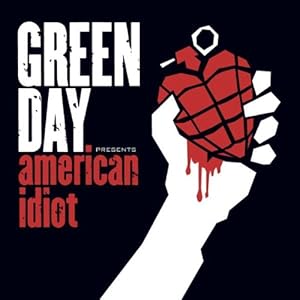
There have really only been a few albums that I can honestly say I was obsessed with. I’ve liked and continue to like plenty, but when it comes to ones that I legitimately did not stop listening to for months, the number drops off significantly.
The one album that stands out among these select few is Green Day’s American Idiot. I was actually worried that I wouldn’t be able to listen to it when it first came out, as it had the dreaded “Parental Advisory: Explicit Content” sticker on its cover, something that my parents took very seriously at the time. At least, I thought they took it very seriously until I came home from school one day in October and saw American Idiot waiting for me on the couch because my dad didn’t notice the sticker when he went out to buy it (I was comically horrible at getting away with anything in high school, so I pointed this out to him almost immediately. He shrugged and grinned sheepishly. It was a nice moment for the two of us). Then it went into my CD player, and it remained there until sometime around Christmas, by which point I had memorized the lyrics to every track.
I still enjoy listening to the album, but I don’t do so nearly as often—or with nearly as much fervor—as I did back in the halcyon days of 2004. This is partly because I just don’t get as excited about things at age 23 as I did at age 16, a phenomenon I am going to blame blindly on biology. But I think it’s more so because it’s not 2004 anymore, and American Idiot was very much an album meant for 2004. More specifically, it was an album meant for burgeoning teenage rock fans who knew they were upset about the Iraq war and wanted the Bush administration out of office in 2004 but weren’t very good at articulating why.
Part of me remains slightly upset about having missed out on the 1960s, although this part did begin drastically shrinking once I went to college and needed to start doing actual research on the decade for history papers. This quickly revealed that, while it had certainly been an exciting and interesting decade, it had not been the nonstop parade of America’s Most Important Historic Events the way Forrest Gump had made it seem.
But this didn't matter when I was 16. When I was 16, the only thing that really mattered about the 60s was the music, and the music was incredible. And not just incredible but important. Great bands were writing great songs about war and social change back then, a topic that seemed a lot more worthwhile than the topics music was exploring in 2004. So I largely retreated into classic rock that year. Seeing if Sgt. Pepper’s was really as good as everyone said it was seemed like a better use of my time than paying attention to any bands that had gotten together after 1988.
And then American Idiot came out, and all of a sudden I realized that new rock music could be about important things, too. This was an album about a war, and the war that it was about hadn't ended 13 years before I was born. It was pretty messy and occasionally pretentious, but so were my reasons for not supporting the Iraq war in 2004, so this worked out pretty well for me. Besides, the mess and pretention didn’t matter nearly as much as did the mere fact that this was an antiwar album that came out in my lifetime. I didn’t have to pretend that I had been protesting alongside Creedence Clearwater Revival in 1969 anymore because there was an actual war going on and actual protest music being written about it now. It finally felt both like there were important events going on around me and like there was music being written to reflect this. 23-year-old Eddie recognizes that this is a pretty reductive and egotistical way to look at current events. 16-year-old Eddie didn't give a shit.
Oh, and the songs were good, too (and pretty innovative, at least for Green Day. Who would've thought the guys behind "Longview" could pull off two nine-minute tracks in one album?). So I decided to listen to them for three months straight.
And then Bush was reelected, and I went up to Minnesota for the holidays and got really into Oasis, and Green Day released the still good but relatively inconsequential 21st Century Breakdown, and the war in Iraq went on for another seven years. So realistically speaking, American Idiot’s lasting impact—on me, on the band, on the country—wasn’t especially significant. But it’s hard for anything not to seem especially significant when you’re 16, especially a political rock album that happens to come out right when you’re starting to get very interested in politics and rock music. Being too young to find it condescending when celebrities tell you what to think about anything except themselves didn’t hurt either.
So thanks, Green Day. Having said that, I have to admit that I’m not particularly interested in how you feel about Afghanistan.
Tuesday, January 17, 2012
What Is Dubstep?
I know I'm not old. Sometimes I like to say I'm old, but all I really mean by this is that kids today aren't watching the same shows I watched on Nickelodeon when I was eight, and this makes me insecure. When you get right down to it, I'm still only 23. I'm not a kid anymore (although I do still have an affinity for Hey Arnold!), but I haven't started losing my hair, I'm still convinced that "joint pain" is just a rumor propagated by AARP lobbyists, and I don't really have a problem with Pop-Tarts for dinner as long as you're not making a habit out of it (once a week, max) (maybe twice, but we'd have to be talking about some pretty outstanding Pop-Tarts in a scenario like this).
But this whole dubstep thing is making the "old" issue a little more complicated.
I want to make one thing clear right away: the problem is not that I hate dubstep. Hating a genre of music that's popular hasn't disqualified you from being young and hip since at least 1978. Personally, I completely gave up on trying to like all types of popular music sometime last year, as I was working with middle school students who repeatedly made sure that I knew this was never going to happen. And it turned out to be easier and more enjoyable to retreat into my narrow little slice of pop culture where everyone is really excited for the new White Rabbits album and pretty unaware of what Katy Perry is up to anyway.
So, to reiterate: the problem is not that I hate dubstep. The problem is that I don't know what dubstep is.
I mean this very, very literally. I know that it's a type of music, and that's it. I've read the Wikipedia entry (kind of) (I mean, I read the intro to the Wikipedia entry. I would've read the whole article, but it was long, and I'm a busy man), and I've listened to a few YouTube videos named something along the lines of "Song [Dubstep Mix]," and I still can't really figure out what dubstep is. The videos I've found either just look and sound like bass heavy remixes of already popular songs or postmodern Target commercials.
Honestly, though, I can't say the Wikipedia entry was entirely unhelpful, as it did offer this relatively concise and straightforward definition of the genre: "tightly coiled productions with overwhelming bass lines and reverberant drum patterns, clipped samples, and occasional vocals." I don't really understand what this means, but I can see how it might be helpful should dubstep ever come up in conversation:
Hip Young Person: Say, have you heard the latest dubstep song?
Me: You mean the one featuring tightly coiled productions with overwhelming bass lines and reverberant drum patterns, clipped samples, and occasional vocals?
Hip Young Person: Umm...yes. That one. Anyway, I'm going to walk away now. But you should stay here.
Which would actually be great for me because I wouldn't have anything to say after that first sentence, thus proving that we've really only treated the symptom here.
It's one thing to hate something popular. There's honor and occasional foresight in that, as anyone who didn't buy a Furby can attest to. But to be almost entirely ignorant of something popular? There's not too much honor in that. Just a lot of senior discounts.
I think I'm going to grow my hair out.

But this whole dubstep thing is making the "old" issue a little more complicated.
I want to make one thing clear right away: the problem is not that I hate dubstep. Hating a genre of music that's popular hasn't disqualified you from being young and hip since at least 1978. Personally, I completely gave up on trying to like all types of popular music sometime last year, as I was working with middle school students who repeatedly made sure that I knew this was never going to happen. And it turned out to be easier and more enjoyable to retreat into my narrow little slice of pop culture where everyone is really excited for the new White Rabbits album and pretty unaware of what Katy Perry is up to anyway.
So, to reiterate: the problem is not that I hate dubstep. The problem is that I don't know what dubstep is.
I mean this very, very literally. I know that it's a type of music, and that's it. I've read the Wikipedia entry (kind of) (I mean, I read the intro to the Wikipedia entry. I would've read the whole article, but it was long, and I'm a busy man), and I've listened to a few YouTube videos named something along the lines of "Song [Dubstep Mix]," and I still can't really figure out what dubstep is. The videos I've found either just look and sound like bass heavy remixes of already popular songs or postmodern Target commercials.
Honestly, though, I can't say the Wikipedia entry was entirely unhelpful, as it did offer this relatively concise and straightforward definition of the genre: "tightly coiled productions with overwhelming bass lines and reverberant drum patterns, clipped samples, and occasional vocals." I don't really understand what this means, but I can see how it might be helpful should dubstep ever come up in conversation:
Hip Young Person: Say, have you heard the latest dubstep song?
Me: You mean the one featuring tightly coiled productions with overwhelming bass lines and reverberant drum patterns, clipped samples, and occasional vocals?
Hip Young Person: Umm...yes. That one. Anyway, I'm going to walk away now. But you should stay here.
Which would actually be great for me because I wouldn't have anything to say after that first sentence, thus proving that we've really only treated the symptom here.
It's one thing to hate something popular. There's honor and occasional foresight in that, as anyone who didn't buy a Furby can attest to. But to be almost entirely ignorant of something popular? There's not too much honor in that. Just a lot of senior discounts.
I think I'm going to grow my hair out.
Monday, January 16, 2012
A Few Tips
1. If you ever wake up one day and decide to go running at the gym instead of outside because it's too cold out but then get extremely cold on your walk to the gym and decide you'll run there to keep warm, the best way to deal with the irony is to not think about it.
2. If, while running, you put your iPod on shuffle and "Total Eclipse of the Heart" comes on, causing you to realize that, at some point over the past 23 years, you have learned all the lyrics to "Total Eclipse of the Heart," reassuring yourself that you did so ironically will not prove especially comforting.
3. If a song by this hip new indie band you've been checking out lately comes on afterwards, it will help a little bit. But not too much. Especially because, deep down, you know that running to "Total Eclipse of the Heart" was more fun.
4. And, hey, at least the version of "Total Eclipse of the Heart" you have on your iPod is the one where Meat Loaf sings backup. He's legit. Kind of. I mean, he was in Fight Club.
5. If you're trying to melt cheese that has been refrigerated, bring it to room temperature first.
2. If, while running, you put your iPod on shuffle and "Total Eclipse of the Heart" comes on, causing you to realize that, at some point over the past 23 years, you have learned all the lyrics to "Total Eclipse of the Heart," reassuring yourself that you did so ironically will not prove especially comforting.
3. If a song by this hip new indie band you've been checking out lately comes on afterwards, it will help a little bit. But not too much. Especially because, deep down, you know that running to "Total Eclipse of the Heart" was more fun.
4. And, hey, at least the version of "Total Eclipse of the Heart" you have on your iPod is the one where Meat Loaf sings backup. He's legit. Kind of. I mean, he was in Fight Club.
5. If you're trying to melt cheese that has been refrigerated, bring it to room temperature first.
Thursday, January 12, 2012
Why Headphones Are Important
If headphones didn't exist, and you happened to be at the gym with a lot of people who are much stronger than you are, and you wanted to listen to the soundtrack from, say, The Book of Mormon or Avenue Q or Spamalot while you worked out, it would be very difficult to do so without publicly compromising the aura of masculinity you have worked so hard to maintain over the years.
I'm not saying this has happened to me before, but I am saying that, yeah, this happened to me when I went to the gym today. Thank you, Nathaniel Baldwin.
But not for supporting polygamy. Just for headphones.
Subscribe to:
Comments (Atom)